
Digital Transformation in Healthcare
Industry? Choose ACESnWS
At ACESnWS, we empower healthcare providers, hospitals, and clinics with cutting-edge digital solutions that streamline operations, improve patient experiences, and enhance clinical decision-making. Our healthcare tech innovations are built to meet today’s challenges and tomorrow’s growth.
Our Digital Transformation in Healthcare Industry Solution
Smarter Systems. Better Care. Healthier Outcomes.
Why Digital Transformation in Healthcare Industry?
The healthcare industry in India hospitals and clinics still depend on paper files, disconnected systems, and manual processes.
In today’s world, patients expect faster, safer, and more personalized care. But many hospitals and clinics in India still depend on paper files, disconnected systems, and manual processes. This leads to delays, mistakes, and frustrated patients.
Without the right digital tools, healthcare providers face common problems like:
Slow Patient Care – Manual records make it hard to find patient history quickly.
Medical Errors – Misplaced files or unclear handwriting can lead to wrong treatments.
Billing Confusion – Manual billing and coding cause delays in insurance claims and payments.
Poor Patient Communication – Patients struggle to book appointments or get test results on time.
No Real-Time Data – Doctors can’t make quick, informed decisions without up-to-date patient information.
Digital transformation in healthcare industry solves these issues with solutions like electronic health records (EHR) systems, telemedicine applications, AI-powered healthcare analytics, patient engagement portals, and medical billing software.
In short — healthcare digital transformation helps you save lives faster, reduce errors, improve patient satisfaction, and run your hospital or clinic more efficiently.
By adopting healthcare IT solutions such as AI/ML in healthcare, IoT-enabled patient monitoring, and cloud-based hospital management software, you can:
Access complete patient history in seconds.
Reduce medical errors with accurate digital records.
Speed up billing and insurance claims.
Offer virtual consultations through secure telemedicine platforms.
Monitor patient health in real-time with connected devices.
Benefits of Digital Transformation in Healthcare Industry
Smarter Systems. Better Care. Healthier Outcomes.
Our Process
Each phase of the software development lifecycle with Agile and Scrum
 Requirements
 System Analysis
 UI/UX Design
 Development
 System Testing
 Implementation
FAQs
Each phase of the software development lifecycle with Agile and Scrum
1 1 What does “digital transformation” mean specifically for a healthcare organisation?
Digital transformation in healthcare refers to the integration of advanced digital technologies — such as cloud-based platforms, AI/ML analytics, remote monitoring, IoT devices and interoperability of health data — into virtually all aspects of care delivery, operations, and patient experience.
2 2 Why is digital transformation critical for hospitals, clinics and other healthcare providers today?
Healthcare organisations face increasing pressures: rising costs, regulatory and compliance demands, patient expectations for convenience and personalised care, and operational inefficiencies. Digital transformation enables improved care outcomes, better efficiency and more responsive services.
3 3 What kind of benefits can a healthcare provider realise via digital transformation?
Typical benefits include:
-
Enhanced patient engagement and experience (e-consultations, remote monitoring)
-
Improved operational efficiency and cost savings (automated admin tasks, better resource utilisation)
-
Better data-driven clinical decisions and personalised care via analytics/AI
-
Stronger interoperability and access to patient records across care settings.
4 4 What challenges should a healthcare organisation anticipate when undertaking digital transformation?
Key challenges include:
-
Legacy systems, fragmented data and lack of interoperability.
-
Privacy, security and compliance risks (sensitive patient data, regulatory scrutiny).
-
Change management, staff training and cultural resistance to new workflows.
-
Need for a clear digital strategy — without which investments may fail to deliver expected ROI.
5 5 Do we have to replace all our current systems and infrastructure to go digital?
Not necessarily. A staged / phased approach is often the best route: integrate or modernise existing systems, start with high-impact areas (e.g., remote care or cloud records), and gradually scale. Full replacement can be costly and disruptive. The goal is to deliver value early while building the backbone for deeper transformation.
6 6 How long does a digital transformation journey in healthcare typically take, and where should we begin?
There’s no one-size-fits-all timeline — it depends on size, scope, current maturity and the regulatory environment. Many organisations start to see meaningful improvement within 12-24 months when they prioritise the right use-cases. Begin with a clear roadmap: define business outcomes (e.g., improved patient throughput, lower readmissions), select pilot areas, measure, then scale.
7 7 How does partnering with ACE Software n Web Solutions make the digital transformation journey easier and more successful for a healthcare provider?
By working with ACE Software n Web Solutions you gain a partner who:
-
Understands the healthcare domain (clinical workflows, regulatory requirements like patient data privacy).
-
Helps you define the right strategy — not just technology for technology’s sake — aligning digital solutions with outcomes like operational efficiency, patient experience and data-driven care.
-
Provides custom software, app development and AI/ML services tailored to your specific healthcare setting (rather than generic off-the-shelf).
-
Supports implementation, change management, and post-deployment monitoring so you get measurable value and faster ROI.
Advanced Technologies
Powerful tools that transforms the way software is developed to make it more efficient, more effective, and more innovative
Artificial Intelligence (AI) and Machine Learning (ML)
AI and ML enhance ERP systems by automating tasks and providing predictive insights, improving decision-making and operational efficiencies.
Internet of Things (IoT)
IoT technology integrates with ERP systems for real-time data collection from connected devices, optimizing asset management and supply chain operations.
Business Intelligence (BI) and Analytics
BI and Analytics transform data into actionable insights within ERP systems, enabling informed decision-making through dashboards and reporting tools.
Cloud Computing
Cloud-based ERP solutions offer scalable and flexible access to ERP functionalities, supporting remote access and collaboration while ensuring data security.
Robotic Process Automation (RPA)
RPA in ERP systems automates repetitive and rule-based tasks, streamlining operations and improving efficiency by mimicking human actions within digital systems.
Augmented Reality (AR) and Virtual Reality (VR)
AR and VR technologies enhance ERP systems by providing immersive training, maintenance simulations, and visualization of data and workflows, improving understanding and efficiency.
Web Application Development
Web applications are developed in many technologies, we have expertise in all












Mobile App Development
Mobile applications are developed as native, cross-platform and web apps, as per client need






eCommerce development
eCommerce are developed customized or tool-based as per client need




AI development
We offer Artificial Intelligence services with Gen-AI, ML, IoT, RPA, AR





















-
Leveraging AI to Personalize Patient Care: The Future of Hospital Management Software
The healthcare industry stands on the brink of a digital revolution, led by Artificial Intelligence (AI). This revolution is transforming the way hospitals manage patient care, making it more personalized and efficient. For decision-makers in healthcare, understanding how AI can
-
Blockchain in Healthcare: Ensuring Data Integrity & Security
In an era where data breaches are increasingly common, and the sanctity of personal information is continuously at risk, the healthcare industry stands at a pivotal juncture. The necessity to safeguard sensitive patient data while ensuring its accuracy and availability
-
How Machine Learning is Transforming Predictive Analytics in Healthcare
The integration of Machine Learning (ML) into healthcare is heralding a new era of medical innovation, particularly in the realm of predictive analytics. This transformation promises to enhance patient care, improve outcomes, and streamline healthcare operations. For healthcare decision-makers, understanding
-
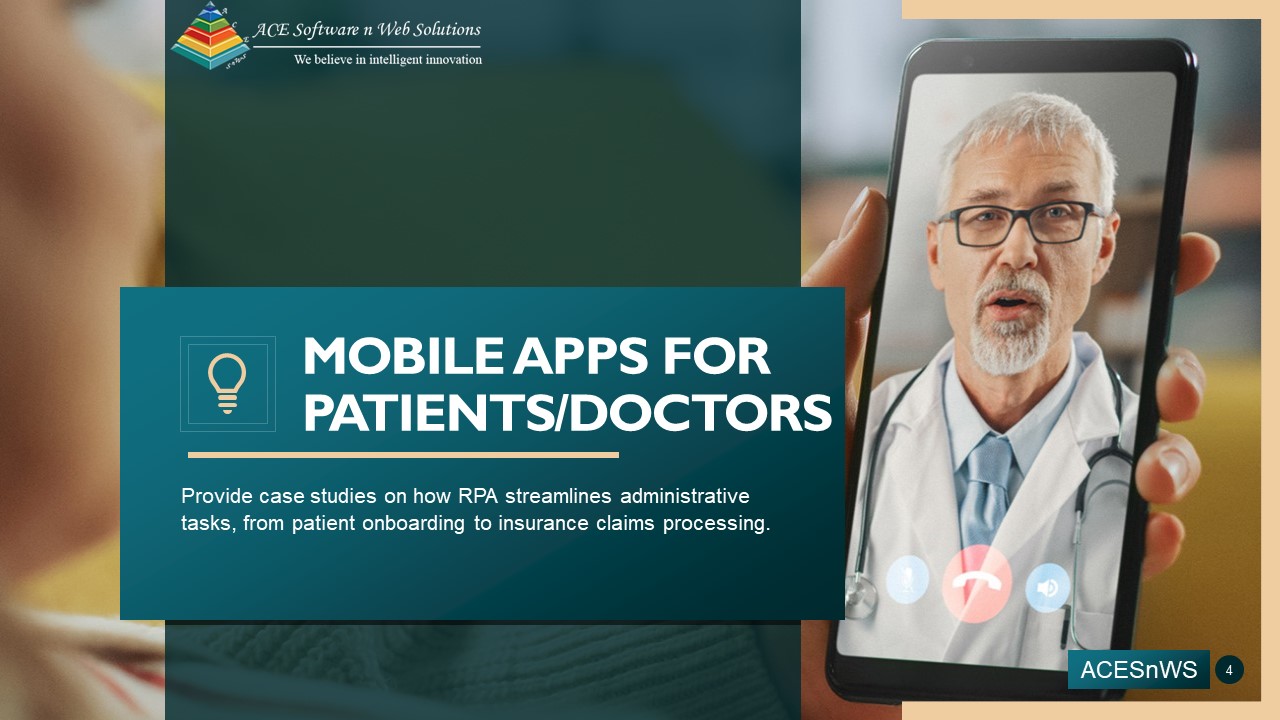
The Rise of Telehealth: Developing Mobile Apps That Connect Patients and Doctors
In recent years, telehealth has emerged as a transformative force in healthcare, reshaping how patients interact with medical professionals. The global pandemic accelerated this shift, highlighting the value of telehealth services in ensuring continuous care while minimizing physical contact. Central
