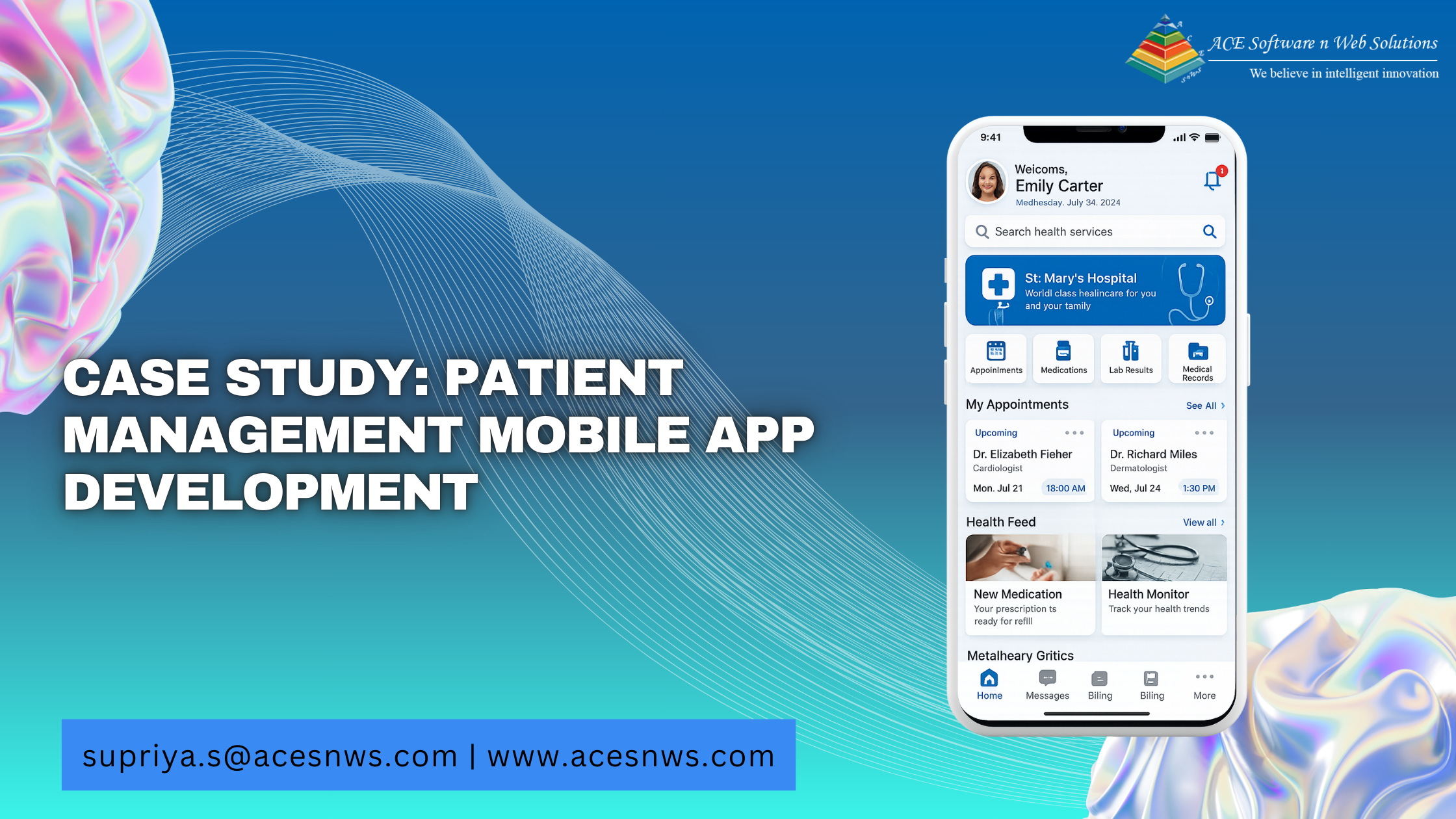
Case Study: Patient Management Mobile App Development
Case Study: Patient Management Mobile App Development Transforming Healthcare Accessibility and Efficiency
Business Challenge
Healthcare providers today face growing pressure to deliver faster, more accessible, and patient-centric care. Traditional patient management systems were heavily dependent on manual processes, paper records, and disconnected hospital software. This resulted in long waiting times, missed appointments, poor patient engagement, and limited visibility into patient health history.
The healthcare industry is undergoing rapid digital transformation, yet many hospitals, clinics, and diagnostic centers still rely on fragmented systems and manual workflows to manage patient information and daily operations. The client, a multi-specialty healthcare provider, was facing increasing operational strain due to rising patient volumes, growing expectations for digital accessibility, and stringent regulatory requirements.
Despite having skilled medical professionals, the lack of a unified patient management system was creating inefficiencies that impacted both patient experience and internal productivity. The client approached us seeking a custom mobile app development solution that could address these challenges holistically.
Patients, on the other hand, struggled with appointment scheduling, accessing medical reports, medication reminders, and communication with healthcare providers. Hospitals and clinics needed a mobile-first patient management solution that would simplify operations while improving patient accessibility and overall care experience.
Objective
The primary goal of this mobile app development project was to create a comprehensive Patient Management Mobile App that enables healthcare providers to streamline workflows and empowers patients with easy access to healthcare services anytime, anywhere.
Key objectives included:
- Improving patient accessibility and engagement
- Reducing administrative workload
- Digitizing patient records securely
- Enhancing communication between patients and healthcare professionals
- Ensuring compliance with healthcare data security standards
Solution Overview
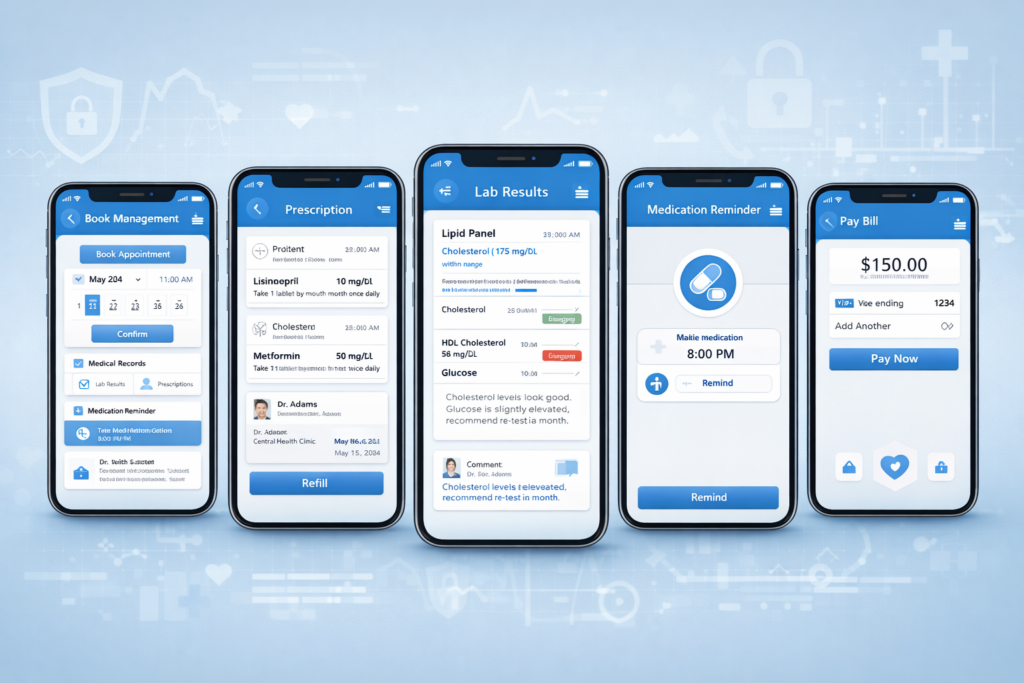
Our team delivered a custom mobile app development solution tailored specifically for the healthcare industry. The Patient Management Mobile App was designed for both Android and iOS platforms, ensuring a seamless experience for patients, doctors, and hospital staff.
The app acts as a centralized patient management system, connecting patients, doctors, laboratories, and administrators on a single digital platform.
Key Features & Functionalities
1. Patient Registration & Profile Management
Patients can easily register using their mobile number or email and create a digital health profile. The profile stores medical history, allergies, ongoing treatments, and previous consultations.
2. Appointment Scheduling & Management
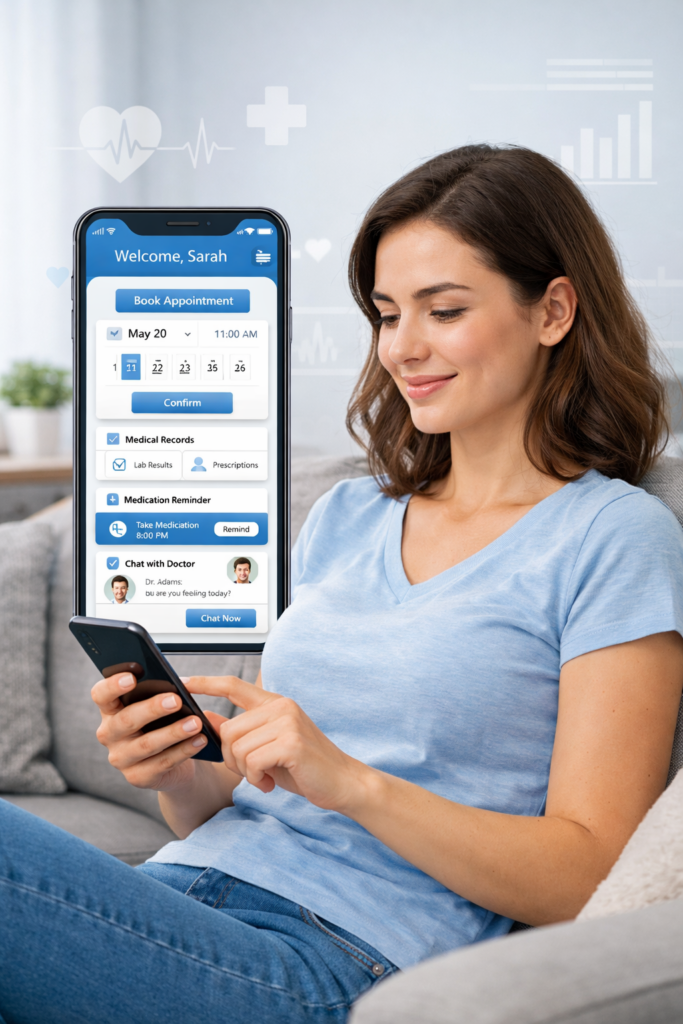
The mobile app allows patients to book, reschedule, or cancel appointments in real time. Doctors can manage availability, reducing no-shows and optimizing consultation time.
3. Digital Medical Records
All prescriptions, lab reports, and diagnostic images are securely stored and accessible through the app. This eliminates paper records and enables faster decision-making.
4. Medication & Appointment Reminders
Automated notifications help patients adhere to medication schedules and upcoming appointments, improving treatment outcomes.
5. Doctor-Patient Communication
Secure in-app chat and video consultation features enable remote care, making healthcare accessible even for patients in remote locations.
6. Billing & Payment Integration
The app integrates secure digital payment gateways, allowing patients to pay consultation fees, lab charges, and hospital bills directly from the mobile app.
7. Admin Dashboard & Analytics
Healthcare administrators gain real-time insights into patient flow, appointment trends, and operational efficiency through an intuitive dashboard.
Fragmented Patient Data & Manual Record Keeping
One of the biggest challenges was the absence of centralized digital records. Patient information was scattered across paper files, standalone hospital systems, spreadsheets, and lab software. Doctors often spent valuable consultation time searching for historical data, test results, or previous prescriptions.
This fragmentation increased the risk of:
- Incomplete or outdated medical information
- Human errors in diagnosis or treatment
- Delays in patient care and clinical decision-making
Without a secure and accessible mobile healthcare solution, both patients and healthcare providers lacked real-time visibility into patient health data.
Limited Patient Accessibility & Engagement
Patients had no single digital platform to interact with the healthcare provider. Appointment booking required phone calls or physical visits, often leading to long waiting times and scheduling conflicts. Accessing medical reports involved repeated follow-ups and visits to the hospital.
This lack of accessibility resulted in:
- Poor patient engagement and dissatisfaction
- Missed appointments and delayed treatments
- Limited continuity of care, especially for chronic patients
In an era where digital convenience is expected, the absence of a patient-focused mobile app development strategy was significantly impacting patient trust and loyalty.
Inefficient Appointment & Resource Management
Doctors’ schedules were managed manually, making it difficult to balance patient load, emergency cases, and follow-up visits. Sudden cancellations or rescheduling caused underutilization of doctors’ time, while peak hours led to overcrowding and longer wait times.
From an operational perspective, the healthcare provider struggled with:
- High appointment no-show rates
- Poor visibility into daily patient flow
- Difficulty optimizing doctor availability and clinic resources
The client needed a smart mobile app development solution that could automate scheduling and provide real-time updates.
High Administrative Workload & Operational Costs
Administrative staff spent a large portion of their time on repetitive tasks such as patient registration, appointment confirmations, record updates, billing coordination, and follow-ups. These manual processes increased operational costs and slowed down service delivery.
Key pain points included:
- Duplicate data entry across multiple systems
- Delays in billing and payment reconciliation
- Increased dependency on human intervention
The absence of a digital patient management mobile app was directly impacting efficiency and profitability.
Communication Gaps Between Patients & Healthcare Providers
Communication between patients, doctors, laboratories, and administrative teams was largely dependent on phone calls and emails. This often led to missed messages, delayed responses, and miscommunication regarding prescriptions, test results, or follow-up care.
For patients in remote locations or with mobility challenges, accessing timely medical advice was particularly difficult. The client needed a secure mobile app development framework that enabled real-time communication while maintaining patient data privacy.
Data Security, Compliance & Scalability Challenges
Healthcare data is highly sensitive, and the client was concerned about compliance with data protection regulations and industry standards. Existing systems lacked advanced security controls, audit trails, and role-based access mechanisms.
Additionally, the legacy infrastructure was not scalable. As patient numbers grew, system performance degraded, and integrating future technologies like telemedicine, AI diagnostics, or wearable device data became increasingly complex.
Summary of the Core Challenge
The client was not just facing a technology gap but a systemic challenge across accessibility, efficiency, data management, and patient experience. They needed a robust, scalable, and secure mobile app development solution that could unify patient management processes, enhance digital healthcare delivery, and support long-term growth.
This set the foundation for developing a comprehensive Patient Management Mobile App designed to transform healthcare accessibility and operational efficiency.
Technology Stack Used
- Frontend: Flutter / React Native for cross-platform mobile app development
- Backend: Node.js with REST APIs
- Database: HIPAA-compliant cloud-based databases
- Security: Role-based access control, encrypted data storage, secure authentication
Implementation Approach
The project followed an agile mobile app development lifecycle, starting with requirement analysis and user journey mapping. Multiple prototypes were tested with healthcare professionals to ensure usability. The solution was built with scalability in mind, allowing future integration with wearables, AI diagnostics, and hospital ERP systems.
Business Impact & Results
The implementation of the Patient Management Mobile App Development solution delivered measurable improvements across patient experience, clinical efficiency, and operational performance. By digitizing and centralizing patient workflows through a secure mobile app, the healthcare provider achieved both immediate and long-term business value.
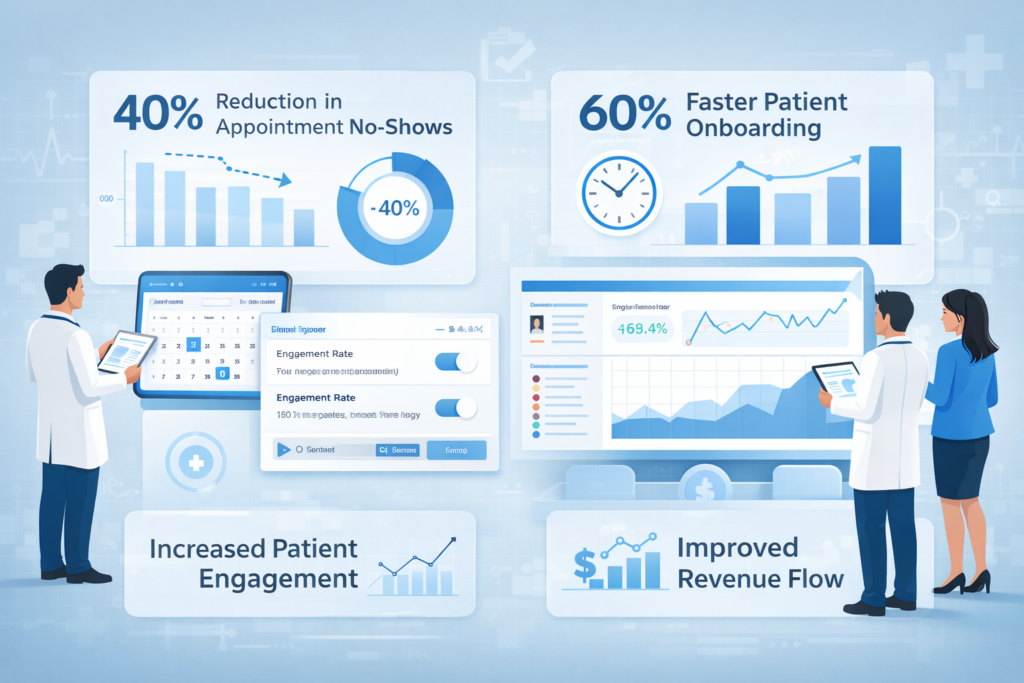
- 40% reduction in appointment no-shows
- 60% faster patient onboarding process
- Improved patient satisfaction through 24/7 accessibility
- Enhanced data accuracy and compliance
- Reduced administrative costs and paperwork
Significant Reduction in Appointment No-Shows
Prior to implementing the mobile app, appointment no-shows were a persistent challenge, leading to lost revenue and inefficient use of doctors’ time. Manual reminders via phone calls were inconsistent and time-consuming.
With automated appointment scheduling, real-time availability updates, and push notification reminders, the mobile app dramatically improved patient attendance. Patients could easily reschedule or cancel appointments, ensuring vacant slots were filled efficiently.
Impact:
- Up to 40% reduction in appointment no-shows
- Improved utilization of doctors’ schedules
- Increased daily consultation capacity without adding staff
This resulted in better time management and predictable patient flow across departments.
Faster Patient Onboarding & Reduced Waiting Time
Manual registration processes and repeated form-filling caused delays at reception desks, especially during peak hours. Patients often had to re-enter personal and medical information during each visit.
The mobile app enabled digital patient registration and profile management, allowing patients to complete onboarding before arriving at the healthcare facility. Medical histories and documents were readily available to clinicians.
Impact:
- 60% faster patient onboarding
- Reduced waiting time at hospitals and clinics
- Improved first-touch patient experience
This directly contributed to higher patient satisfaction and smoother front-desk operations.
Enhanced Patient Accessibility & Engagement
The Patient Management Mobile App empowered patients with 24/7 access to healthcare services. Patients could view medical records, prescriptions, lab reports, and treatment plans from their smartphones.
Medication reminders and follow-up notifications helped patients stay engaged in their care journey, especially those managing chronic conditions.
Impact:
- Increased patient engagement and retention
- Better adherence to medication and treatment plans
- Stronger patient-provider relationships
The mobile-first approach positioned the healthcare provider as a modern, patient-centric organization.
Improved Clinical Decision-Making & Care Quality
Doctors gained instant access to complete and accurate patient histories through the mobile app. Having lab reports, prescriptions, and past consultations in one place enabled quicker diagnosis and more informed treatment decisions.
This eliminated dependency on physical files and reduced the risk of medical errors caused by incomplete information.
Impact:
- Faster clinical decisions
- Reduced diagnostic errors
- Improved continuity of care across departments
The mobile app development solution directly supported better healthcare outcomes.
Reduction in Administrative Workload & Operational Costs
Administrative teams previously spent hours on repetitive tasks such as appointment confirmations, record updates, and billing coordination. Automation through the mobile app significantly reduced manual intervention.
Digital billing, integrated payments, and centralized data eliminated duplication of work and reduced paperwork.
Impact:
- Lower administrative overhead
- Reduced dependency on manual processes
- Improved staff productivity
Healthcare staff could now focus more on patient care rather than operational tasks.
Improved Revenue Collection & Financial Transparency
The integration of digital payments within the mobile app simplified billing for patients and improved cash flow for the healthcare provider. Patients could pay consultation fees and service charges instantly, reducing delays and payment follow-ups.
Admins gained real-time visibility into revenue trends and outstanding payments.
Impact:
- Faster payment cycles
- Reduced billing disputes
- Improved financial tracking and reporting
This contributed to better financial control and predictable revenue streams.
Strengthened Data Security & Regulatory Compliance
Healthcare data security was significantly enhanced through encrypted data storage, role-based access control, and secure authentication mechanisms built into the mobile app.
The solution was designed to align with healthcare data protection standards, ensuring patient confidentiality and audit readiness.
Impact:
- Reduced risk of data breaches
- Improved regulatory compliance
- Increased patient trust in digital healthcare services
Security and compliance became a competitive advantage rather than a concern.
Scalability & Long-Term Digital Readiness
The mobile app development architecture was designed with scalability in mind. The healthcare provider can now seamlessly integrate future enhancements such as telemedicine, AI-driven diagnostics, wearable device data, and hospital ERP systems.
Impact:
- Future-proof digital healthcare infrastructure
- Ability to scale operations without system limitations
- Faster adoption of emerging healthcare technologies
Overall Business Outcome
By adopting a robust Patient Management Mobile App Development solution, the healthcare provider transformed its operations, enhanced patient accessibility, and established a strong foundation for digital healthcare delivery.
The mobile app not only improved efficiency but also created a measurable competitive edge in an increasingly digital healthcare ecosystem.
Conclusion
This Patient Management Mobile App Development case study demonstrates how custom mobile app development for healthcare can revolutionize patient care and operational efficiency. By embracing digital healthcare solutions, hospitals and clinics can deliver smarter, faster, and more connected care experiences.
Mobile app development is no longer a luxury in healthcare—it is a necessity for organizations aiming to provide accessible, efficient, and patient-centric services in the digital era.