
Case Study: Healthcare Digital Transformation
Healthcare Digital Transformation Case Study: How Software, Mobile Apps, and AI Revolutionized Patient Care?
Introduction: The Urgent Need for Digital Transformation in Healthcare
The healthcare industry is under constant pressure to deliver faster, safer, and more patient-centric services while maintaining compliance and operational efficiency. Hospitals and clinics still relying on fragmented systems, manual processes, and disconnected data often face challenges such as delayed treatments, administrative overload, billing errors, and poor patient engagement.
This case study explores how a mid-sized healthcare organization successfully achieved healthcare digital transformation through a combination of custom healthcare software development, mobile app development, and AI-powered solutions. By implementing an integrated Hospital Information System (HIS), Electronic Health Records (EHR), and a Patient Mobile App, the organization transformed its clinical workflows, improved patient outcomes, and significantly reduced operational inefficiencies.
Client Overview: A Growing Healthcare Network Facing Scaling Challenges
The client is a multi-specialty healthcare group operating:
- 2 hospitals
- 5 outpatient clinics
- 1 diagnostic center
With increasing patient volumes, the organization struggled to manage operations across locations using legacy systems and spreadsheets. Each department worked in silos, leading to data duplication, delays, and poor visibility for decision-makers.
Key Challenges Identified
- Manual patient registration and appointment scheduling
- Disconnected clinical, billing, and pharmacy systems
- Delayed access to patient medical history
- Poor patient engagement post-discharge
- No centralized reporting or analytics
- High administrative workload for doctors and staff
Pre-Transformation Situation: Disconnected Systems and Data Silos
Before digital transformation, the healthcare provider faced several operational bottlenecks.
1. Inefficient Hospital Information Management
The absence of a unified Hospital Information System (HIS) meant:
- Front-desk staff manually entered patient details multiple times
- Doctors lacked real-time access to patient records
- Billing and insurance processing were slow and error-prone
2. Limited Use of Electronic Health Records
Although some patient data was digitized, there was no standardized EHR system:
- Lab reports were stored separately
- Diagnostic images were not linked to patient history
- Clinical decision-making relied heavily on paper files
3. Poor Patient Experience
Patients experienced:
- Long waiting times
- No digital access to reports or prescriptions
- No reminders for follow-ups or medications
- Limited communication with doctors outside hospital visits
Digital Transformation Strategy: A Unified Healthcare Ecosystem
To address these challenges, a custom healthcare software development approach was adopted instead of off-the-shelf products. The strategy focused on building an interconnected digital ecosystem consisting of:
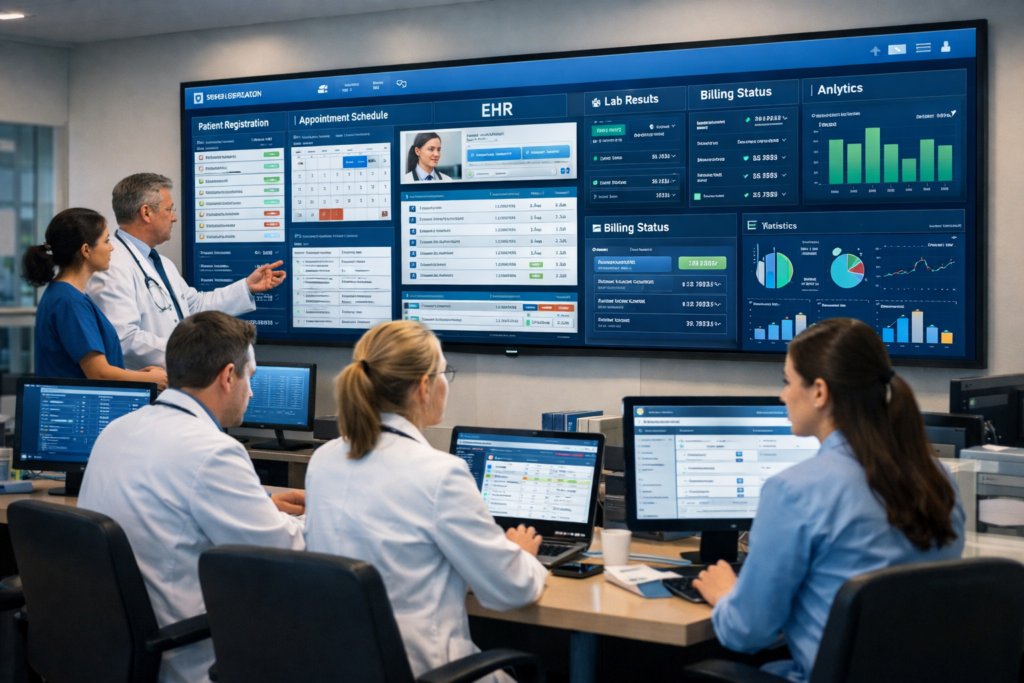
- Hospital Information System (HIS)
- Electronic Health Records (EHR) Platform
- Patient Mobile Application
- AI-driven analytics and automation
Solution Architecture: Software, Mobile App, and AI Integration
1. Custom Hospital Information System (HIS)
A centralized Hospital Information System was developed to manage all core hospital operations.
Key Features Implemented
- Patient registration and appointment scheduling
- Doctor and staff management
- Billing, invoicing, and insurance processing
- Pharmacy and inventory management
- Laboratory and diagnostic integration
Impact
- Reduced patient registration time by 60%
- Improved coordination between departments
- Eliminated duplicate data entry
2. Advanced Electronic Health Records (EHR) System
A robust EHR platform was built to ensure seamless access to patient medical data across all touchpoints.
EHR Capabilities
- Unified patient medical history
- Digital prescriptions and clinical notes
- Lab reports and diagnostic images
- Secure role-based access for doctors and staff
- Compliance with healthcare data security standards
How It Fixed the Problem
Doctors could now:
- Access patient records instantly
- Make faster and more accurate clinical decisions
- Reduce medical errors caused by incomplete information
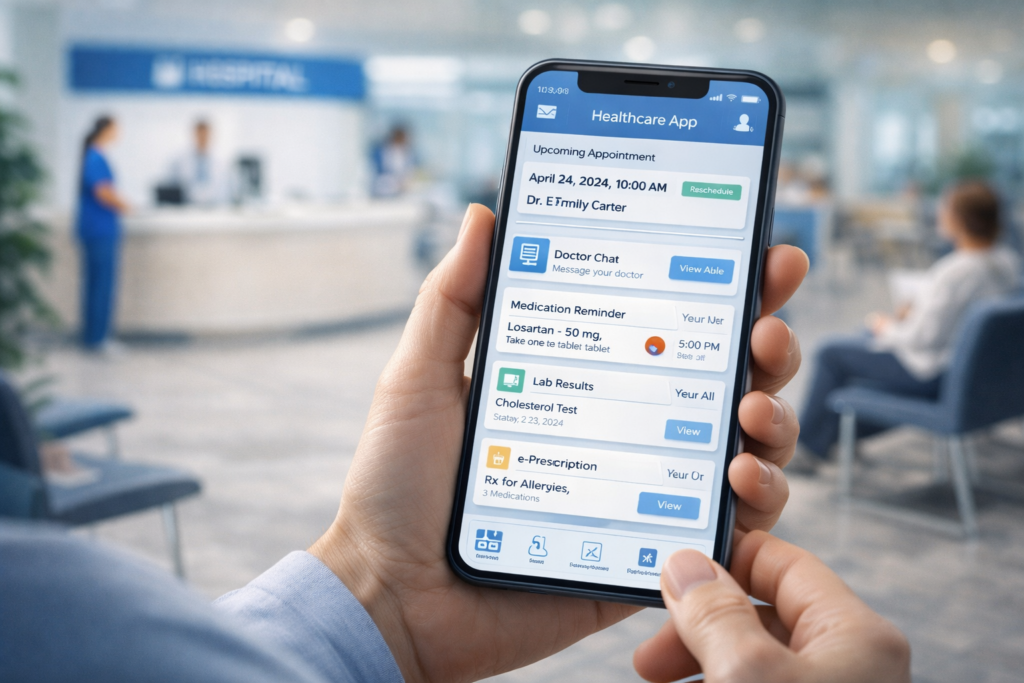
3. Patient Mobile App: Empowering Patients Digitally
A feature-rich Patient Mobile App was developed as part of the healthcare mobile app development initiative.
Patient App Features
- Online appointment booking
- Access to medical reports and prescriptions
- Medication and follow-up reminders
- Secure chat with doctors
- Digital payment and invoice access
Resulting Improvements
- Patient engagement increased significantly
- Reduced no-show appointments
- Improved medication adherence
📱 Mobile app screens showing appointment booking and report access
4. AI-Powered Healthcare Automation and Analytics
Artificial Intelligence played a critical role in optimizing operations and improving care delivery.
AI Use Cases Implemented
- Predictive analytics for patient inflow
- Automated appointment scheduling
- AI-assisted clinical insights from EHR data
- Early warning alerts for high-risk patients
Business and Clinical Benefits
- Better resource planning
- Reduced emergency overload
- Early detection of potential complications
📊 AI analytics dashboard with predictive charts and patient trends
Security, Compliance, and Data Privacy
Healthcare data security was a top priority throughout the digital transformation journey.
Measures Taken
- End-to-end data encryption
- Role-based access control
- Secure cloud infrastructure
- Regular audit logs and compliance checks
This ensured patient data privacy while meeting healthcare regulatory requirements.
Results Achieved: Measurable Impact on Healthcare Operations
After implementing the digital healthcare ecosystem, the organization observed tangible results within six months.
Operational Improvements
- 40% reduction in administrative workload
- Faster billing and insurance settlements
- Centralized reporting for management
Clinical Outcomes
- Improved diagnosis accuracy
- Faster treatment decisions
- Reduced patient readmission rates
Patient Satisfaction
- Higher patient retention
- Positive feedback on digital accessibility
- Improved trust and transparency
Why Custom Healthcare Software Development Was the Right Choice
Unlike generic healthcare solutions, custom healthcare software development allowed the system to:
- Scale with business growth
- Integrate seamlessly with existing infrastructure
- Adapt to evolving clinical and regulatory needs
This flexible approach ensured long-term sustainability and ROI.
Conclusion: A Blueprint for Healthcare Digital Transformation
This healthcare digital transformation case study demonstrates how the right combination of software development, mobile app development, and AI integration can redefine healthcare delivery.
By implementing a unified Hospital Information System, intelligent EHR platform, and patient-centric mobile app, the healthcare provider successfully transitioned from fragmented operations to a connected, data-driven ecosystem.
For healthcare organizations aiming to improve efficiency, patient experience, and clinical outcomes, investing in custom digital solutions is no longer optional — it is essential for future-ready healthcare.