
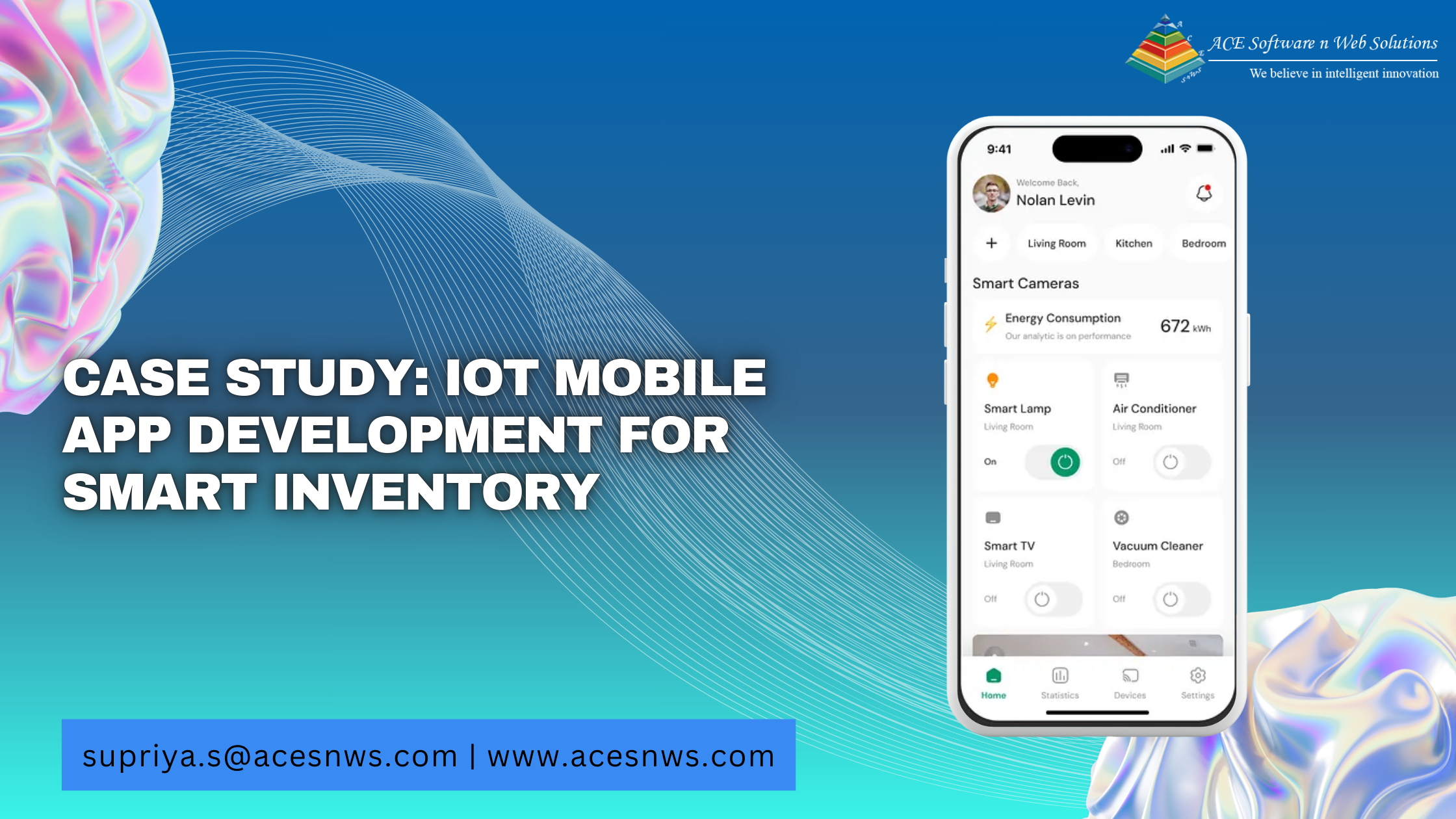
Case Study: IoT Mobile App Development for Smart Inventory Tracking
Case Study: IoT Mobile App Development for Smart Inventory Tracking in Manufacturing
Client Overview
A mid-sized manufacturing company operating across multiple plants in India was facing recurring challenges in inventory management. Despite having an ERP system in place, the client relied heavily on manual data entry, spreadsheets, and delayed stock updates. This resulted in frequent stockouts, excess inventory overruns, production delays, and working capital blockage. The client approached us for a mobile app development solution that could integrate IoT devices with real-time inventory visibility across warehouses and shop floors.
Business Challenges
The client is a mid-sized manufacturing enterprise operating in a highly competitive and cost-sensitive environment. With multiple production lines, warehouses, and a complex supplier network, efficient inventory management was critical to maintaining profitability and meeting delivery timelines. However, like many manufacturing organizations, the client was struggling with legacy processes that were no longer scalable.
Despite using a traditional ERP system, the lack of real-time visibility and mobile accessibility created significant gaps between physical inventory and system records. These challenges were common across the manufacturing industry, where rapid production cycles demand accurate, instant inventory data.
The manufacturing company faced several operational and financial issues:
- No real-time inventory tracking across raw materials, WIP, and finished goods
- Delayed stock updates causing production halts and emergency procurement
- Overstocking due to inaccurate demand forecasting
- Manual reconciliation between ERP, warehouse records, and physical stock
- Lack of mobile access for plant managers and procurement teams
The client needed a custom IoT-enabled mobile app that could provide live inventory data, reduce human dependency, and improve decision-making.
1. Lack of Real-Time Inventory Visibility
Inventory data was updated manually at fixed intervals, often at the end of shifts or days. This delay meant:
- Stock levels shown in systems did not reflect actual shop-floor reality
- Materials consumed during production were not immediately recorded
- Decision-makers operated on outdated information
Without real-time inventory tracking, production and procurement teams could not respond proactively, resulting in frequent mismatches between demand and availability.
2. Heavy Dependence on Manual Processes
Most inventory-related activities—stock entry, issue recording, reconciliation—were performed manually using spreadsheets and paper-based logs. This led to:
- Human errors in data entry
- Time-consuming reconciliation between physical stock and digital records
- High dependency on specific individuals for critical updates
The absence of a mobile app development solution made it impossible for staff to capture data instantly on the shop floor or in warehouses.
3. Frequent Stockouts Impacting Production
Stockouts were a recurring issue, especially for critical raw materials and fast-moving components. These shortages resulted in:
- Sudden production stoppages
- Idle manpower and machine downtime
- Emergency procurement at premium prices
The manufacturing unit lacked automated alerts or predictive insights, making inventory management reactive instead of preventive.
4. Inventory Overruns and Excess Stock
To avoid production delays, procurement teams often over-ordered materials as a safety measure. This resulted in:
- Excess inventory occupying valuable warehouse space
- Increased carrying and insurance costs
- Material aging, damage, and obsolescence
Without data-driven insights, the balance between availability and optimization was difficult to achieve.
5. Poor Coordination Between Departments
Production, procurement, warehouse, and finance teams worked in silos. Each department relied on different data sources, leading to:
- Conflicting inventory numbers
- Delayed approvals and misaligned planning
- Lack of accountability
The absence of a unified mobile app development and IoT platform prevented seamless collaboration.
6. Limited Mobility for Plant Managers & Decision Makers
Supervisors and managers had no mobile access to inventory insights. Critical decisions were delayed because:
- Reports were available only on desktops
- Real-time shop-floor visibility was missing
- Approvals required physical presence or manual communication
In a fast-paced manufacturing environment, this lack of mobility slowed down operations.
7. Scalability & Future Growth Constraints
As the company planned to expand operations, existing inventory processes could not scale. Challenges included:
- Inability to integrate new plants quickly
- No readiness for automation or Industry 4.0 adoption
- Increased risk of inefficiencies with growth
The client needed a future-ready mobile app development solution integrated with IoT to support long-term scalability.
Summary of the Challenge
The client’s challenges were not isolated issues but interconnected problems rooted in outdated inventory practices. The manufacturing industry today demands real-time data, automation, and mobile accessibility.
To overcome these challenges, the client required a custom IoT-based mobile app development solution that could transform inventory tracking into a real-time, automated, and intelligent process—laying the foundation for smart manufacturing and sustainable growth.
Solution: IoT-Based Mobile App Development for Manufacturing
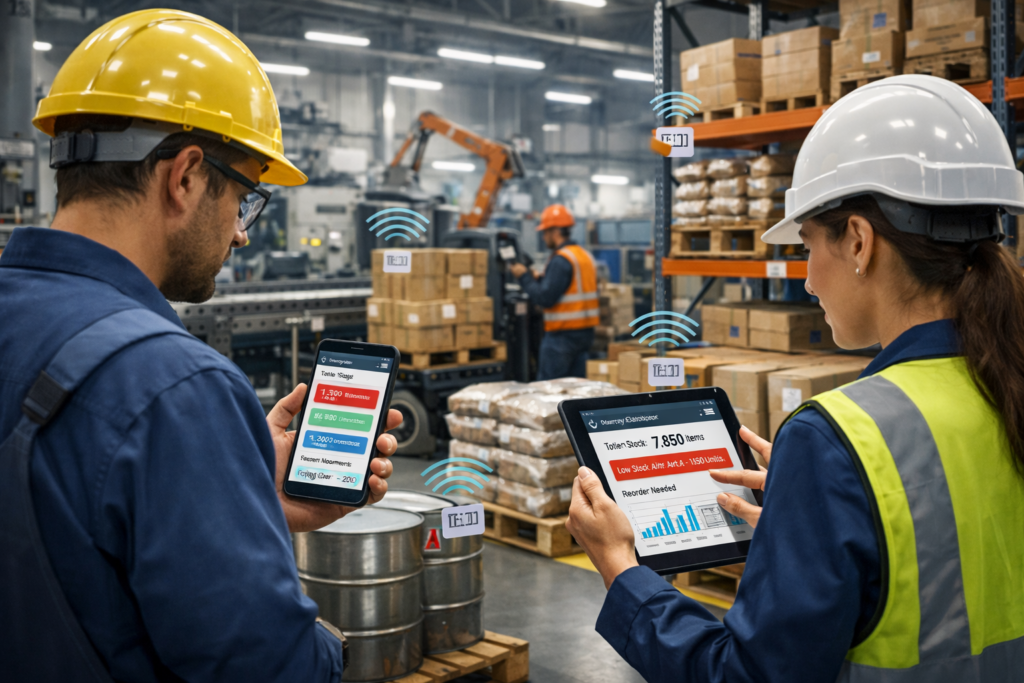
Our team designed and delivered a custom IoT mobile app development solution tailored specifically for the manufacturing industry. The solution combined IoT sensors, RFID scanners, and a centralized mobile application to enable seamless inventory monitoring.
Key Features of the Mobile App
- Real-Time Inventory Tracking: IoT sensors captured stock movement automatically at every checkpoint
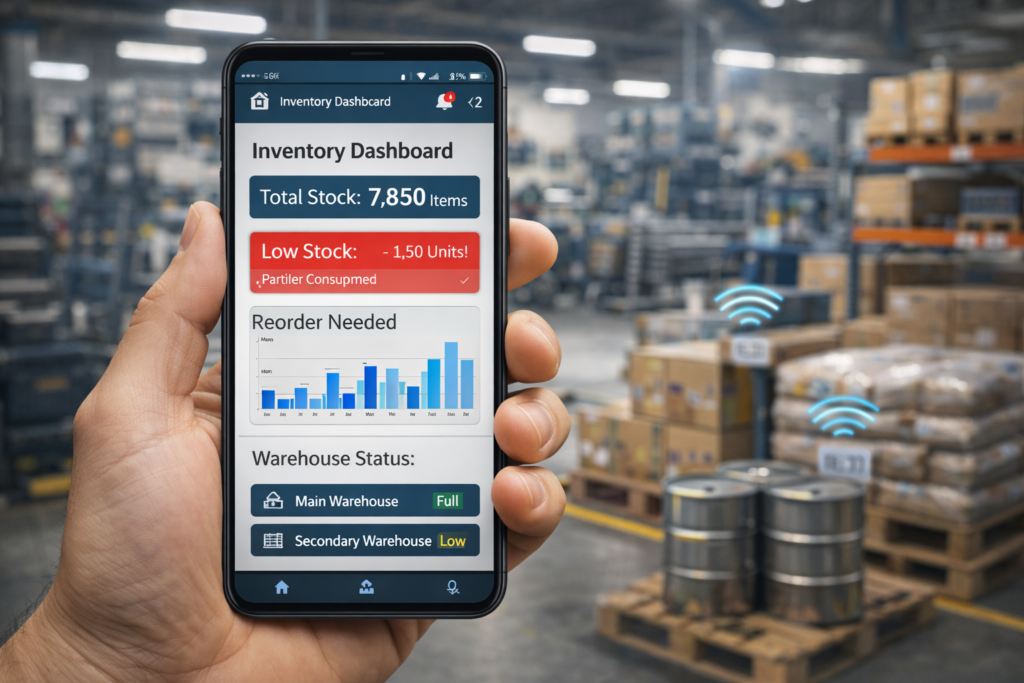
- Mobile App Dashboard: Live inventory levels accessible via Android and iOS devices
- Stock Threshold Alerts: Automatic alerts for low stock, overstock, and reorder points
- Batch & Lot Tracking: Full traceability for raw materials and finished goods
- ERP Integration: Seamless sync with existing ERP systems
- Role-Based Access: Custom views for plant heads, procurement teams, and management
This mobile app development initiative ensured data accuracy, reduced manual intervention, and provided real-time operational insights.
Technology Stack
- Mobile App Development: Android & iOS
- IoT Integration: RFID, smart sensors, barcode scanners
- Backend: Cloud-based microservices architecture
- Database: Real-time data processing and analytics
- Security: Encrypted data transfer and role-based authentication
The solution followed best practices in custom software development and scalable mobile app architecture to support future expansion.
Implementation Approach
The project was executed in phases:
- Requirement Analysis & Process Mapping
- IoT Device Integration & Testing
- Mobile App Development & UI/UX Design
- ERP Synchronization
- Pilot Deployment at One Plant
- Full-Scale Rollout Across Facilities
Continuous user feedback helped refine workflows and improve usability for non-technical users on the shop floor.
Business Impact & Results
The implementation of the IoT-based mobile app development solution delivered significant operational, financial, and strategic benefits across the manufacturing organization. By replacing manual inventory tracking with a real-time, sensor-driven mobile system, the company achieved measurable and sustainable improvements.
Within six months of implementation, the manufacturing company achieved measurable improvements:
- 40% reduction in inventory overruns
- 30% decrease in stockouts
- 25% faster production planning cycles
- Improved working capital utilization
- Enhanced decision-making through real-time data
The IoT mobile app development solution transformed inventory management from a reactive process into a proactive, data-driven system.
1. 40% Reduction in Inventory Overruns
Before adopting the IoT-enabled mobile app development solution, the manufacturing unit frequently faced excess stock due to inaccurate visibility into real-time inventory levels. Overstocking led to higher storage costs, increased material aging, and unnecessary capital lock-in.
With real-time data captured through IoT sensors and instantly reflected in the mobile app dashboard:
- Inventory was automatically adjusted as materials moved across warehouses and production lines
- Overstock situations were identified early through smart alerts
- Procurement decisions were aligned with actual consumption patterns
This resulted in a 40% reduction in inventory overruns, significantly lowering warehousing costs and improving material utilization.
2. 30% Decrease in Stockouts
Stockouts were a major issue due to delayed updates and reliance on manual inventory reporting. Production teams often discovered shortages only when materials were required on the shop floor, leading to unplanned downtime and emergency purchases at higher costs.
The mobile app development solution introduced:
- Live stock visibility across raw materials, WIP, and finished goods
- Automated reorder-level notifications on mobile devices
- Real-time alerts to procurement teams before critical shortages occurred
As a result, the company achieved a 30% decrease in stockouts, ensuring uninterrupted production and smoother supply chain operations.
3. 25% Faster Production Planning Cycles
Earlier, production planning relied on outdated or incomplete inventory data, causing frequent plan revisions and scheduling conflicts. Planners spent significant time validating stock availability before finalizing production schedules.
With real-time inventory data accessible through the IoT-powered mobile app:
- Production planners could instantly validate material availability
- Planning cycles became faster and more accurate
- Production schedules were aligned with actual inventory and demand
This led to a 25% improvement in production planning efficiency, reducing delays and improving on-time order fulfillment.
4. Improved Working Capital Utilization
Excess inventory and emergency procurement were negatively impacting cash flow. The lack of visibility made it difficult to balance optimal stock levels with financial planning.
By implementing IoT-based mobile app development:
- Inventory holding costs were reduced
- Capital previously tied up in excess stock was released
- Procurement spending became more predictable and controlled
This directly improved working capital utilization, strengthening the company’s financial health and liquidity.
5. Enhanced Decision-Making Through Real-Time Insights
One of the most impactful outcomes of the mobile app development initiative was the shift from reactive to data-driven decision-making.
The mobile dashboard provided:
- Real-time inventory KPIs
- Consumption trends and demand patterns
- Plant-wise and material-wise inventory analytics
Management teams could now make informed decisions quickly, reducing dependency on manual reports and guesswork.
6. Increased Operational Transparency & Accountability
The mobile app introduced complete traceability for inventory movement:
- Every transaction was digitally logged
- Batch and lot-level tracking improved audit readiness
- Role-based access ensured accountability at every stage
This improved operational discipline and reduced discrepancies across departments.
Final Outcome
The IoT-driven mobile app development solution transformed inventory management into a smart, automated, and highly efficient process. The manufacturing company not only eliminated stockouts and inventory overruns but also gained long-term scalability and operational resilience.
By embracing custom mobile app development with IoT integration, the client positioned itself for smarter manufacturing, better cost control, and sustained growth in a competitive market.
Conclusion
This case study demonstrates how mobile app development combined with IoT technology can revolutionize inventory management in the manufacturing industry. By enabling real-time inventory tracking, automation, and mobile accessibility, manufacturers can eliminate inefficiencies, avoid costly stockouts, and prevent inventory overruns.
For manufacturing companies looking to embrace smart manufacturing solutions, custom mobile app development with IoT integration is no longer optional—it is a strategic necessity for operational excellence and scalable growth.